

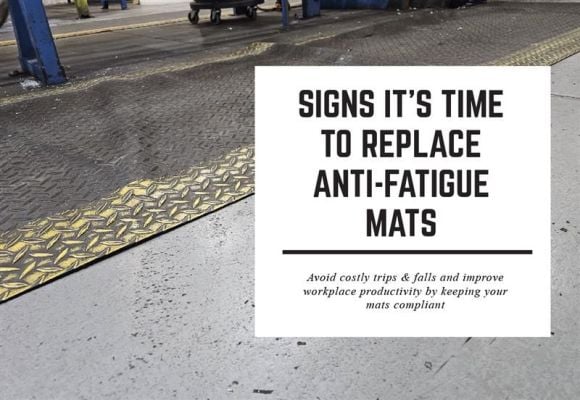
Signs It’s Time to Replace Anti-Fatigue Mats
Anti-fatigue mats are widely used in workplaces, kitchens, and workshops for a reason. Standing on hard floors for long periods places heavy strain on legs, backs, and joints. Mats provide cushioning that reduces discomfort and improves safety.
Like any surface exposed to daily use, mats break down over time. Once they lose their protective qualities, they stop doing their job. At that point, a mat can become more of a hazard than a benefit. Knowing the warning signs helps avoid accidents and unnecessary discomfort.
Visible Wear and Tear
The most obvious signal comes from what you can see. Surface cracks, curling edges, or worn-down areas tell you the mat is no longer offering full protection. These physical changes also introduce risks. A curling edge is a direct trip hazard, while a cracked surface can catch shoes or equipment.
For many businesses, mats sit in heavy-use environments such as warehouses, food preparation areas, or workshops. Constant foot traffic, chemical exposure, and cleaning cycles gradually wear down the material. Some mats thin out in the centre where people stand most. Others break down at the edges where moisture and grit collect.
It is important to note that different types of matting break down in different ways. A rubber mat might harden and crack, while foam mats may compress until there is little support left. If you are considering replacement, it helps to compare how different materials hold up in demanding environments. That way, you can choose a mat with better long-term performance, reducing the chance of facing the same problem too soon.
Reduced Comfort and Support
The main reason anti-fatigue mats are purchased in the first place is comfort. When they stop relieving strain, replacement is overdue. A mat that once made long hours at a standing desk or workbench more manageable can eventually feel flat and lifeless.
Signs of reduced comfort include:
- Workers reporting sore feet or legs despite standing on mats.
- Pressure points forming in areas where people stand the most.
- A feeling that the mat is “bottoming out,” with little bounce left.
Fatigue can creep back slowly, so it may not be obvious at first. If discomfort returns after just a few hours of standing, the mat is likely no longer effective. In our experience, when mats reach this stage, staff often describe them as feeling no different from standing on bare concrete. That kind of feedback is usually the clearest signal that the surface has lost its value.
When assessing whether a mat has lost its cushioning, it can be useful to compare what proper support should feel like in a new product. Our anti-fatigue mat buying guide provides benchmarks for comfort levels and explains the qualities you should expect when a mat is fresh out of the box. Reviewing those standards against what you are experiencing now often makes the decision to replace much clearer.
Slipping or Movement Issues
Safety is one of the biggest benefits of using mats. A stable surface helps prevent slips and falls, particularly in workplaces where liquids, grease, or cleaning agents are present. When mats stop gripping the floor properly, they become a liability.
There are two main signs to watch for:
- The mat slides or shifts when walked on. This often happens after the backing wears down or when contaminants build up underneath.
- The mat bunches or ripples instead of lying flat. This can happen when the surface warps with age or if the mat was never designed for the environment it is in.
Mats that no longer stay in place may increase the risk of an accident. In areas such as kitchens or production floors, that risk is even higher because spills and foot traffic are constant. In fact, WorkSafe WA reports that slips, trips and falls account for about one in five lost time injuries each year in the state. That figure highlights how serious unstable flooring can be in any workplace.
Some users even point out that mats which are too thick or too soft can create their own hazards. In a Whirlpool forum thread, one contributor advised that mats need to be “anti-slip, anti-trip (bevelled edges) and not spongy – 20mm thick or less is the usual.” That perspective shows how wear, poor design, or even incorrect product choice can make surfaces less safe instead of more supportive.
In those cases, hygiene and stability are tightly linked. A surface that moves too much becomes difficult to keep clean, and poor cleaning leads to contamination. For businesses in food preparation, hygiene and maintenance routines are critical to extending mat life. When mats can no longer be kept stable or sanitary, it is better to replace them rather than continue with an unsafe surface.
Hygiene Concerns
Mats take a lot of punishment in busy workplaces. Over time, stains, odours, and ingrained dirt can reach the point where regular cleaning no longer helps. Once bacteria or mould set in, the surface becomes unhygienic, even if it still looks serviceable from a distance.
For example:
- Mats in kitchens can absorb oils or food residues.
- Workshop mats might trap fine dust and chemical spills.
- Office mats may hold odours from repeated coffee spills.
When cleaning takes more effort than it is worth, replacement is the better option. A surface that looks clean but smells unpleasant often signals deeper contamination. This is especially concerning in industries where hygiene is closely monitored. In food preparation areas, proper mat maintenance is vital for safety and compliance. A mat that cannot be kept sanitary has reached the end of its life.
Outdated Performance Compared to New Options
The matting industry has advanced in recent years. Manufacturers now produce surfaces with better durability, slip resistance, and comfort than earlier models. If your current mats are several years old, they may still function, but they might not perform to modern standards.
Older mats may:
- Lack textured surfaces that improve traction.
- Have weaker edges that fray or curl faster.
- Provide less cushioning compared to newer foam or rubber blends.
Upgrading does not always mean replacing like-for-like. Businesses can gain long-term savings by choosing designs better suited to their environments. For instance, mats for industrial kitchens now combine anti-fatigue cushioning with drainage channels, reducing standing strain while keeping surfaces cleaner. Those working in offices may prefer mats with more subtle designs that match interior spaces.
If you are unsure what has changed since your last purchase, comparing recent anti-fatigue mat options available in Australia helps highlight the improvements. Upgrades may reduce replacement cycles and enhance workplace safety.
Cost vs Value of Replacement
At first glance, the price of a new anti-fatigue mat may seem high, particularly for larger commercial areas. The real cost, though, lies in what happens when old mats are left in service too long.
A comparison helps:
| Old Worn Mat | New Quality Mat |
| Increased trip risk from curled edges | Stable surface that reduces accidents |
| Minimal support leading to worker fatigue | Proper cushioning for extended standing |
| High cleaning effort with little benefit | Easier to maintain hygiene |
| Short lifespan if patched or repaired | Longer lifespan with durable materials |
When weighed against potential medical costs, workplace injuries, or reduced staff performance, the value of replacement becomes clearer.
Another factor is premium models. Some businesses hesitate at the upfront cost, yet higher quality mats often outlast cheaper versions by years. In practical terms, paying more at the start can save money across multiple replacement cycles. It helps to assess whether paying extra for a premium mat will reduce overall costs in the long run.
Preventing Early Wear in the Future
Replacing mats is unavoidable, but lifespan can be extended with proper care. Simple habits make a big difference.
Tips to prolong mat life:
- Clean surfaces regularly with suitable solutions to avoid build-up.
- Rotate mats placed in single high-use spots to spread out the wear.
- Match the mat type to the environment—foam may suit light use in offices, while rubber performs better in factories.
Material choice plays a big role in durability. Foam, rubber, carpet-surfaced, and hybrid mats all respond differently to stress. Comparing how different materials handle wear and cleaning in various settings is useful before deciding on the next purchase.
Hygiene maintenance also matters. In food-prep zones, mats that are easy to sanitise reduce replacement frequency and maintain compliance. If cleaning becomes too difficult, the mat’s life is shortened quickly.
When Should You Replace Your Anti-Fatigue Mats?
Anti-fatigue mats provide comfort, safety, and support. Yet every mat has a limit. Signs such as cracked surfaces, reduced cushioning, slipping, contamination, and outdated features show that replacement is overdue.
Businesses that act quickly avoid safety risks and workplace discomfort. The cost of upgrading is far outweighed by the benefits of safe, hygienic, and effective flooring.
For those preparing to buy, our comprehensive guide to choosing anti-fatigue mats offers practical advice on features, comfort, and sizing. Reviewing these points before making your next purchase will help you select mats that perform better and last longer.


Recent comments