

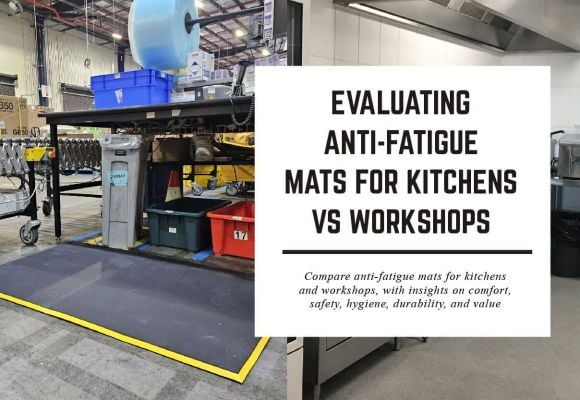
Evaluating Anti-Fatigue Mats for Kitchens vs Workshops
Standing for hours on a hard floor takes a toll on the body. Fatigue sets in faster, productivity falls, and the risk of accidents increases. Safe Work Australia reports that over 12% of workers aged 45–54 experience fatigue as a serious workplace issue, highlighting the scale of the problem across industries. Anti-fatigue mats were designed to address those problems, but not all mats perform in the same way. The right choice depends heavily on the type of environment they are used to.
Kitchens and workshops present very different challenges. Kitchens demand mats that handle constant spills, grease, and frequent cleaning. Workshops require mats that can withstand heavy machinery, dropped tools, and oil exposure. Selecting the wrong type often shortens a mat’s lifespan and can even compromise safety.
For anyone comparing products, our comprehensive buying guide for anti-fatigue mats offers an overview of key factors. Here, the focus is on the practical differences between kitchens and workshops so that decision-making becomes clearer.
Why Kitchens and Workshops Have Different Needs
The environments may look similar at first glance—hard flooring, long hours of standing, and a need for comfort. Yet, the daily demands placed on mats in each space vary significantly.
Kitchens:
- Constant contact with water, oils, and food residue.
- Hygiene standards require quick and effective cleaning.
- Heavy foot traffic across compact working areas.
Workshops:
- Continuous pressure from tools, equipment, and machinery.
- Exposure to solvents, grease, and sharp debris.
- Larger floor areas, often concrete, with a need for durable cushioning.
Materials play a big role in how well a mat performs in these settings. Rubber provides slip resistance and durability, while foam offers comfort but lacks strength under industrial use. For a more detailed look, our comparison of mat materials compared side by side highlights how each option responds to specific workplace conditions.
Key Considerations for Kitchens
Food preparation areas demand mats that combine comfort, hygiene, and slip resistance. The wrong choice can lead to safety hazards or constant replacement.
- Slip Resistance: Kitchens are high-risk zones for falls due to water and grease. Mats must provide strong grip underfoot even when wet. Textured surfaces and drainage holes are common features that improve traction and prevent pooling.
- Hygiene and Cleaning: Health standards in kitchens are strict. Mats must be easy to sanitise, resistant to bacterial growth, and capable of handling regular washing without degrading. Smooth-edged rubber mats are often preferred because they minimise trapped food particles. Practical advice on how to keep mats hygienic in food-prep areas can help extend mat life while keeping staff safe.
- Comfort for Long Shifts: Staff in commercial kitchens often stand for ten or more hours a day. A mat with cushioning reduces fatigue in the legs and back, helping workers remain alert and productive. Rubber mats with integrated comfort zones are typically chosen for this purpose. Several kitchen managers we’ve worked with noted that staff reported feeling less strain in their feet and back after just a week of switching to cushioned mats, especially during long evening shifts.
Kitchens need mats that balance comfort with hygiene. Too much focus on softness without considering cleaning requirements often results in products that fail quickly.
Key Considerations for Workshops
Workshops pose different challenges. Heavy machinery, constant foot traffic, and exposure to industrial substances make durability and strength top priorities.
- Durability and Resistance: Mats must handle the impact of dropped tools and the weight of equipment without tearing. Rubber mats are usually best in these situations because of their resilience.
- Chemical Resistance: Oils, lubricants, and solvents are common in workshops. Mats should resist breakdown when exposed to these substances. Without this, surfaces can deteriorate rapidly.
- Comfort Against Hard Floors: Concrete surfaces amplify fatigue and joint pain. A thick mat provides cushioning that absorbs shock and reduces pressure on the body. In feedback from workshop supervisors, employees highlighted that thicker mats made a noticeable difference during twelve-hour shifts, particularly in reducing leg soreness after standing on concrete all day. A discussion on a trades forum reflected similar experiences, with one chef commenting on the “huge difference” mats made after long kitchen shifts, while another workshop user warned that mats exposed to solvents and rough flooring wore down quickly.
For workshops, it’s often worth reviewing the best anti-fatigue mats currently available in Australia. Heavy-duty options tend to perform better over time, even if the upfront cost is higher.
Shared Benefits Across Both Environments
Regardless of the setting, anti-fatigue mats deliver measurable advantages. The details differ, but the overall gains in safety, comfort, and productivity apply across both kitchens and workshops.
Reduced physical strain: Standing on hard surfaces causes stress on feet, knees, and the lower back. Mats encourage subtle movement in leg muscles, which improves blood flow and lessens fatigue.
Lower accident rates: Slip-resistant surfaces reduce the risk of falls in wet kitchens and oil-prone workshops.
Improved output: Staff working in greater comfort remain more focused and productive for longer hours.
Different materials achieve these results in distinct ways. Foam provides greater cushioning, while rubber offers strength and durability. Our detailed breakdown of different anti-fatigue mat materials can help identify which option best matches a specific workplace.
Aesthetic and Branding Considerations
Function usually comes first, but appearance also plays a role. A well-chosen mat can contribute to brand presentation or workplace identity.
Kitchens often lean toward plain black or grey mats, prioritising cleanliness and easy integration with existing flooring. In contrast, workshops may benefit from custom printing. Safety instructions or directional markings can be incorporated directly into the mat surface. Customer-facing areas, such as showroom floors, sometimes combine anti-fatigue features with company logos for professional presentation.
For organisations seeking this balance, combining anti-fatigue mats with custom logo designs provides both safety benefits and branding impact in a single product.
Cost vs Value in Different Settings
Price can vary widely, yet focusing on upfront cost alone often leads to poor results. A breakdown of typical factors makes the difference clearer:
| Factor | Kitchens | Workshops |
| Replacement Cycle | Frequent, due to cleaning and constant exposure to water and grease | Less frequent, heavy-duty mats often last longer |
| Initial Cost | Usually moderate, prioritising hygiene and comfort | Higher, with thicker and more durable builds |
| Maintenance | Regular washing and sanitisation | Occasional cleaning of oils and debris |
| Overall Value | Cost-effective when balanced with hygiene needs | Value comes from extended durability and reduced replacement rates |
In kitchens, value often comes from mats that are easy to clean yet comfortable. Replacement may be needed more often, but safety standards justify the expense. In workshops, the investment in heavy-duty mats pays back over time through durability and fewer replacements.
Practical Buying Tips
Choosing a mat becomes easier once the priorities of each setting are clear. A few practical guidelines help narrow the selection:
- For kitchens: look for textured surfaces, drainage designs, and anti-microbial properties.
- For workshops: prioritise thickness, heavy-duty rubber, and resistance to oils and chemicals.
- For both: balance comfort with durability, aiming for a product that suits both the physical environment and the tasks performed.
For more structured advice, our comprehensive buying guide for anti-fatigue mats covers the decision-making process step by step.
Choosing the Right Mat for Your Environment
Kitchens and workshops share the same problem: staff stand for long hours on unforgiving floors. The conditions around them, however, demand different solutions. Kitchens call for mats that combine hygiene and slip resistance with enough cushioning for comfort. Workshops demand strength, chemical resistance, and thickness to absorb heavy impact.
Investing in the right product reduces fatigue, increases productivity, and helps maintain a safer workplace. Each environment benefits, but success depends on matching the mat design to the daily challenges faced.


Recent comments