

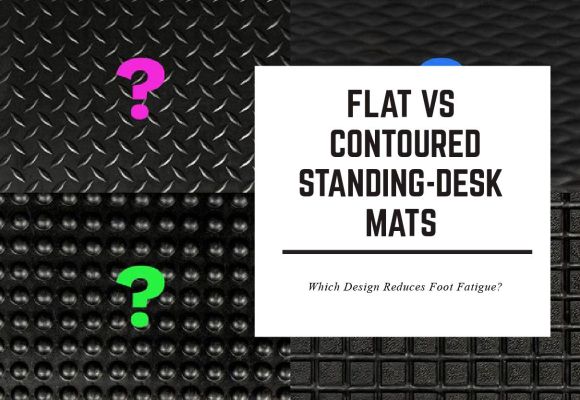
Flat vs Contoured Standing-Desk Mats – Which Design Reduces Foot Fatigue?
Standing desks have become a regular feature in many offices. The shift away from long hours of sitting has clear benefits, but it brings a new challenge: fatigue from standing. Sore feet, aching calves, and lower back strain can set in quickly without the right support.
Standing-desk mats were designed to solve this problem. They cushion hard floors and encourage healthier posture, but the choice between flat and contoured designs often causes confusion. Both aim to reduce fatigue, yet they do so in different ways. To make sense of the options, it helps to look at the science of comfort and movement. For those weighing up materials, durability, and maintenance, a comprehensive anti-fatigue mats buying guide provides a clear foundation before narrowing the choice to shape and design.
Why standing-desk mats matter for comfort and health
Standing for long hours might seem less harmful than sitting, but the body reacts differently when it stays in one position. Joints lock, circulation slows, and muscles tire from carrying weight without variation. The result is stiffness, pain, and reduced focus.
Anti-fatigue mats tackle these issues in several ways:
- Pressure relief – soft but supportive surfaces reduce the load on heels and arches.
- Posture correction – mats promote small adjustments that engage leg and core muscles.
- Circulation support – subtle movement keeps blood flowing, lowering the risk of swelling.
The effectiveness of a mat also depends heavily on its construction. Foam, rubber, and carpet surfaces all change how much support the user feels. Some retain cushioning longer, others handle spills and cleaning better. For a deeper breakdown, our guide to how anti-fatigue mat materials influence comfort and durability covers the differences in detail.
The benefits of mats go beyond physical health. People often notice improved concentration and productivity when discomfort is reduced. For workplaces investing in standing desks, mats become a necessary part of the setup.
Recent research in Victoria supports this point. A trial involving over 200 office workers found that introducing standing desks, along with organisational support, cut sitting time at work by about an hour each day. Researchers also projected that if one in five office workers made the switch, the savings in health care costs could exceed AUD 80 million. Findings like these highlight how supporting more standing time delivers measurable benefits, and mats are a practical part of making those extra hours on foot sustainable.
Flat standing-desk mats explained
Flat mats are the original style and remain popular for their simplicity. They feature a uniform surface without raised zones, ridges, or shapes.
Advantages:
- Stable surface that feels familiar to anyone new to standing desks.
- Easy to move chairs or stools across if alternating between sitting and standing.
- Typically more affordable than contoured designs.
- Cleaning is straightforward because of the smooth finish.
Drawbacks:
- Limited encouragement for movement, leading to static posture.
- Can feel less supportive over time if the material compresses quickly.
- Lower variety in how the mat interacts with the body.
Flat mats suit users who want a no-nonsense surface and a predictable standing experience. They are often chosen for shared workspaces or offices where multiple people use the same desk. In such cases, considerations like mat size and shape influencing ergonomics become just as important as surface design. A mat that is too small may force unnatural posture, regardless of whether it is flat or contoured.
Contoured standing-desk mats explained
Contoured mats introduce texture and variation across the surface. Raised edges, ridges, and domes create areas that invite movement and stretching. Instead of staying still, the user shifts weight and changes stance naturally throughout the day.
Benefits:
- Encourages micro-movements, which keep muscles active and prevent stiffness.
- Promotes better blood circulation compared to static standing.
- Provides varied options for positioning feet, arches, and calves.
- Often designed with ergonomic intent, targeting pressure points and posture.
Limitations:
- Some users find the uneven surface distracting at first.
- Higher purchase cost in comparison to flat mats.
- May not suit every footwear style, particularly heels or formal shoes.
These mats are designed for users who plan to spend long stretches standing and want to reduce fatigue actively. For workplaces looking at the bigger picture, the benefits extend beyond comfort. Subtle movements encouraged by contoured mats can have a direct impact on efficiency and mood. Studies consistently show that reducing discomfort increases focus. This connects closely with ongoing research around anti-fatigue mats and productivity, where ergonomics influence output as much as physical wellbeing.
Direct comparison: flat vs contoured
A side-by-side comparison helps highlight the strengths and weaknesses of each design.
| Feature | Flat Mats | Contoured Mats |
| Surface | Smooth, uniform, stable | Varied with ridges, domes, raised edges |
| Comfort | Basic cushioning for standing | Encourages movement for better circulation |
| Adaptability | Suits all footwear types | Some shoes less suitable (e.g., heels) |
| Learning curve | No adjustment needed | Some users need time to adapt |
| Price | Generally lower | Typically higher |
| Best for | Shared spaces, casual standing | Long-term users seeking active standing |
Flat mats are simpler, cost-effective, and practical in offices with multiple users. Contoured mats add variety to standing positions and actively fight fatigue but come at a higher price point.
The debate between the two designs is often polarising in user forums. One contributor on a standing desk discussion thread commented, “I like the non flat. Keeps your legs from getting tired and your feet from being bored.” That type of opinion reflects how many users feel about contoured surfaces: they value the movement and stimulation, even if the price is higher or the surface less conventional.
Anyone comparing specific models might also look at top anti-fatigue mat recommendations from trusted reviews, as these often feature both flat and contoured options.
Factors to consider before choosing
A decision between flat and contoured mats depends on a few key factors.
- Work environment
- Office staff often prefer flat mats for easy chair movement.
- Home workers or dedicated standing-desk users lean towards contoured mats for extra comfort.
- Time spent standing
- Short sessions of standing are fine with flat mats.
- Long hours favour contoured mats, which keep the body more active.
- Budget
- Flat mats are usually more affordable.
- Contoured mats cost more but can pay off in reduced discomfort over time.
- Footwear
- Trainers and flat shoes work well with either design.
- High heels tend to fit better on flat mats.
- Size and shape
- A small mat limits stance options and creates awkward posture.
- A mat that matches desk width encourages natural positioning. Articles focusing on how mat size and shape affect ergonomics go deeper into this area.
- Durability and cleaning
- Some materials last longer or resist spills better. A mat used in a kitchen or workshop will have different requirements from one in a carpeted office.
- Every factor ties back to how the mat will be used daily. No design works in every situation, but matching the right mat to the environment makes all the difference.
Practical tips for getting the most out of a standing-desk mat
The design of a mat is important, but habits around its use matter just as much.
- Alternate between sitting and standing: Even the best mats can’t replace natural breaks. Using a stool or adjusting desk height during the day prevents overuse of any single position.
- Wear supportive footwear: Good shoes combine with the mat to reduce strain. Thin-soled or hard shoes undermine the benefit.
- Shift position regularly: On contoured mats, place feet on raised areas for stretching. On flat mats, roll ankles or step side to side to keep blood moving.
- Pair with proper desk setup: A mat works best when monitor, desk, and keyboard are adjusted correctly. A poor setup forces awkward posture even if the mat itself is high quality.
- Match size to your workspace: Oversized mats can catch chair wheels, while undersized mats keep feet too close together. Guidance on ergonomic mat dimensions can help refine this choice.
Feedback from users reinforces these points. Several office staff who trialled contoured mats told us they felt less tension in their calves after long afternoons standing. In contrast, teams working in shared spaces often preferred flat mats, as they made moving chairs and stools easier without interruption. These experiences show how the right habits, paired with the right mat, create a noticeable difference in daily comfort.
Practical use amplifies the advantages of both flat and contoured designs. A mat can only do so much if habits remain static.
Which mat design reduces fatigue more effectively?
Flat and contoured mats share the same goal: reducing fatigue during long hours of standing. The difference lies in how they achieve it. Flat mats keep things simple, offering stability and affordability. Contoured mats encourage movement, stimulating circulation and keeping muscles engaged.
The right choice depends on how long the user stands, the type of work being done, and personal comfort preferences. Budget and footwear also play a role, as does the space where the mat will be placed.
In many cases, contoured mats offer stronger fatigue reduction, but not every setting requires them. Offices with shared desks often choose flat mats for practicality, while home workers standing for hours may see more benefit from contoured designs. For readers comparing options, our comprehensive anti-fatigue mats buying guide remains a valuable resource for balancing size, material, and overall ergonomics.


Recent comments